Wheeled Base Safety
Scout Mini, Ranger Mini V2 and V3 — see UGVs.
What is specific to wheeled bases. The checks that apply to every robot we supply — testing the emergency stop, clearing the area, battery handling — are on Operational Safety, and you should read that first.
A wheeled base under manual control has no idea a stair head, loading dock or mezzanine edge is there, and it will drive off one. On a slope it can also keep rolling after you stop commanding it.
Hazards specific to wheeled bases
- Keep hands and cables away from the wheels. The gap between wheel and chassis is a pinch point, and it is at exactly the height where a trailing cable gets pulled in.
- Know which way yours drives. The Scout Mini is four-wheel differential drive: it turns by driving its wheels at different speeds, and it scrubs sideways when it does. The Ranger Mini has four-wheel steering with omnidirectional modes and can crab sideways or rotate on the spot — if you are used to differential drive, the first sideways move is a surprise. Know which platform and which mode you are in.
- Slopes and edges. A base under manual control will drive off a ledge. On a slope it can also keep rolling after you stop commanding it.
- Mind the payload. A tall or heavy payload raises the centre of gravity and makes the base easier to tip, particularly during a fast turn or an emergency stop.
Where you can operate
Assume the base is not waterproof unless yours was specifically customised. Check the product page for a rating before deploying it somewhere wet.
Surfaces. Loose gravel, deep pile carpet, gratings and wet tiles all reduce traction. Watch for drop-offs — stair heads, loading docks, mezzanine edges and open pits.
While you are developing
Raise the base so the wheels turn free. Put it on a stable stool or blocks before running new driving code, and the first bad command costs you nothing.
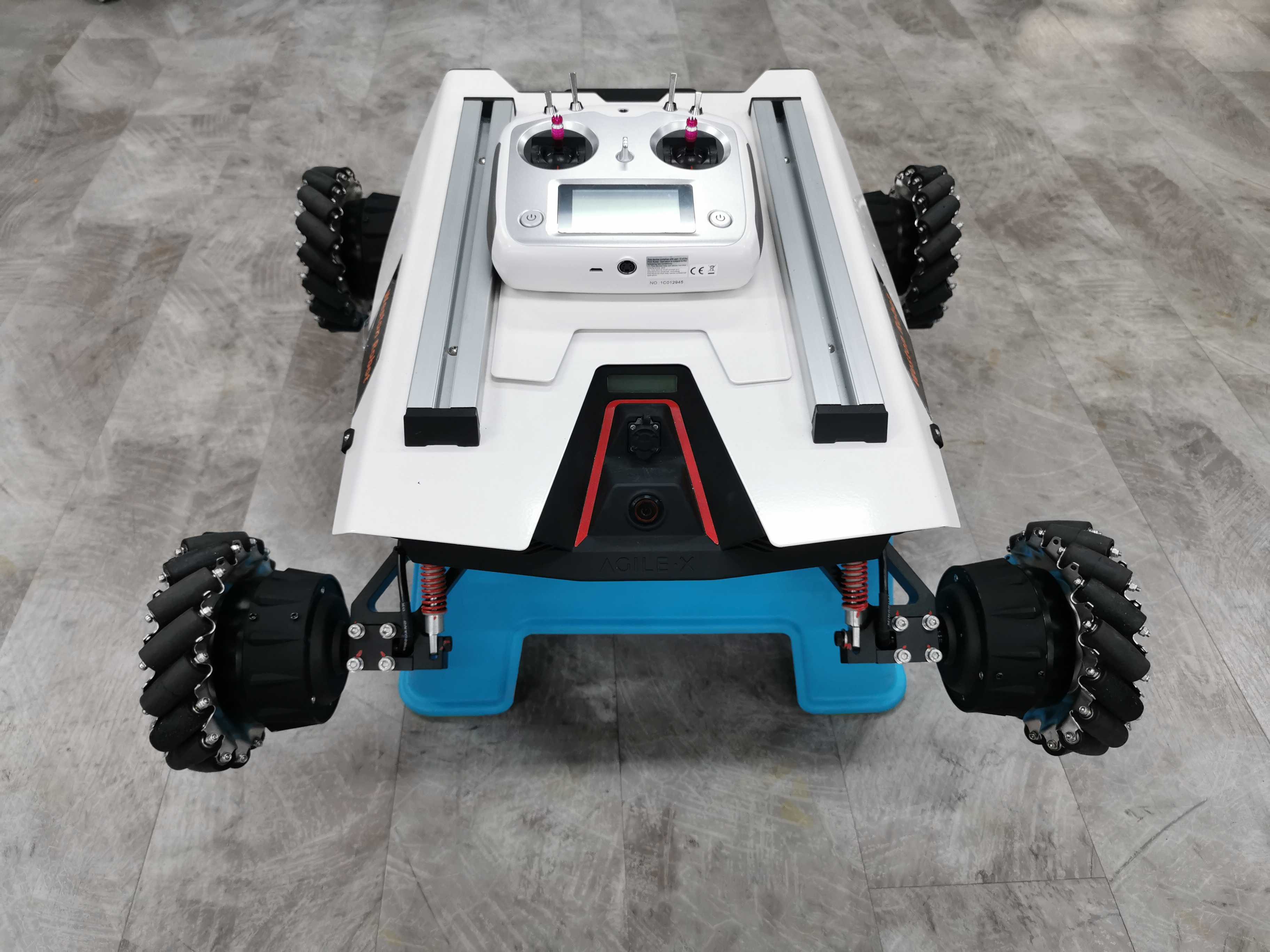
Start slow. Reduced speed for the first run of any new driving code, in a clear area with room to overrun.
Test your limits before you trust them. Speed caps and boundaries should be verified somewhere a mistake is harmless, not discovered when the base hits something.
Never leave a powered base unattended, and turn the RC controller off when you are not driving.
Support
- Operational Safety — the checks that apply to every platform
- Wheeled base maintenance — tyres, hubs and calibration
- Before you contact us — what to collect, and the commands to collect it