Ranger Mini 2.0
This page is kept for owners of existing units. New deployments should use the Ranger Mini 3.0 — contact us if you need something that is not here.
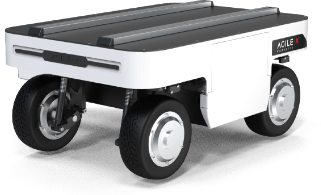
The Ranger Mini 2.0 is AgileX's compact four-wheel swerve-drive UGV — every wheel steers, so it can crab sideways and rotate about its own centre. We supply it as a development platform, driven over CAN from compute you fit yourself or an external machine.
This page does not repeat or replace AgileX's documentation. It highlights the information you reach for most often, and supplements it with what we have learned from supplying and supporting these units — configuration, verified values, and our own guides.
AgileX's own documentation:
Getting started
Read Operational Safety before driving the robot for the first time, including the additional hazards specific to wheeled bases.
The Ranger Mini has no onboard computer of its own — you supply the compute and talk to the base over CAN. Bring-up in outline:
- Charge and power on, and check the base responds to the supplied controller.
- Calibrate the steering if the wheels are not aligned — see Steering Calibration.
- Wire a CAN interface between your computer and the robot.
- Drive it from code using
ugv_sdkor the ROS packages.
Steps 3 and 4 are covered end to end in Robot Base Control.
Looking to add compute, sensors or power distribution? See Peripherals, or the UGV Development Kit for a pre-integrated build.
Key information
A quick reference for the things you reach for most often, collected so you can find them with the robot in front of you. Values are as configured on the units we supply.
Related resources
Files and repositories you clone or download to work with the robot.
| Resource | What it is | Where |
|---|---|---|
| Manual | Ranger Mini 2.0 user manual | EN · CN |
| CAD model | STEP file for mechanical design | Ranger Mini 2.0 STEP |
| C++ SDK | Primary development interface | ugv_sdk |
| ROS package | ROS 1 integration | ranger_ros |
| ROS 2 package | ROS 2 integration | ranger_ros2 |
Installing Weston Robot packages on your host? Add our package repository first: Weston Robot Apt Source.
Dimensions, payload, speed and battery figures are on the official product page rather than copied here.
Firmware
Which build you are running changes what the robot can do, so check before troubleshooting.
| Version | What is different |
|---|---|
| V5.9.1 | E-stop parks the wheels |
| V5.8.7 | No autocalibration — use manual calibration |
| V5.8.3 | Includes autocalibration |
Control interface
The base is driven over CAN. Both ugv_sdk and the ROS packages speak to it over the same interface, so bringing up CAN correctly is the prerequisite for everything else — see Robot Base Control.
Because this is a swerve-drive platform, each wheel steers independently and the steering zero has to be established by calibration. A robot that crabs or pulls to one side almost always needs recalibrating rather than repairing.
Guides for this product
| Guide | What it covers | Reach for it when |
|---|---|---|
| Robot Base Control | Manual and programmatic control over CAN, including interface setup and troubleshooting | Setting the robot up, or driving it from your own code |
| Ranger Mini Steering Calibration | Autocalibration and manual calibration of the steering motors | The robot crabs, pulls to one side, or will not drive straight |
All Ranger Mini guides — generated from the ranger-mini tag, so anything published later appears there without this page being edited.
Troubleshooting & FAQ
Support
Collect the serial number, firmware version and logs before raising a ticket — Before you contact us lists what helps and includes the commands to gather it.